Dance in America: From Tradition to Innovation
A tradition of support and innovation
The very first grant ever awarded by the National Endowment for the Arts went to American Ballet Theatre, reflecting the agency’s early recognition of dance as a vital part of America’s creative life. And for the past six decades, NEA grants have helped choreographers and dance companies create new work, reach wider audiences, and continue to innovate.
In 1970, dancer and choreographer Tina Ramirez founded Ballet Hispánico “to give voice to the Hispanic artists at a time when Hispanics were typecast and struggling to find their place in the arts.” More than 55 years later, under the leadership of Artistic Director Eduardo Vilaro, the company continues to celebrate and expand the story of Latino identity through education, performance, and engagement.
NEA’s long-standing commitment is also reflected in its support for Jacob’s Pillow, another National Medal of Arts recipient and one of the nation’s oldest and most influential dance institutions. Founded in the 1930s by modern dance pioneer Ted Shawn on a historic Massachusetts farm, Jacob’s Pillow has become a world-renowned center for dance creation, performance, education, and preservation. From its earliest days, preservation has been central to Jacob’s Pillow’s mission. With support from the National Endowment for the Arts—including a 1993 NEA Challenge grant for the Dance Anthology Project—the organization helped document and share dance through performance, preservation, and education, recognizing that this living art form is also a vital part of America’s cultural record.
Building on this foundation, the NEA has supported dance preservation nationwide through efforts such as the Images of American Dance: Documenting and Preserving a Cultural Heritage study and programs like the Dance Heritage Coalition, Save America’s Treasures, and American Masterpieces. More recently, through the National Archive of Data on Arts Culture (NADAC), the NEA preserves the Dunham Data Series, a digital research project that uses archival records and data visualization to trace the global touring, repertory, and artistic collaborations of choreographer Katherine Dunham. By making these datasets publicly available, the NEA is supporting new ways to study and share dance history.
Together, these efforts helped improve the nation’s dance documentation system and expanded public access to historic works, ensuring that America’s dance legacy endures for future artists, scholars, and audiences.
Dance as healing
Beyond performance, dance moves both body and spirit. At Creative Forces®: NEA Military Healing Arts Network clinical sites, dance/movement therapy helps provide service members with pathways to recovery from traumatic brain injuries and post-traumatic stress. Through movement, many rediscover strength, connection, and hope—a reminder that the arts can heal as powerfully as they inspire.
![Two photos of a woman dancing. In one of them, another woman - her instructor - looks on. Text reads: "She was teaching us different ways to move that would not cause me pain... The way I feel when I dance, I feel like it turns [the pain] off, like it doesn't exist, like I'm me again, like I'm back to life." -Karidad Ramis-Hartmen, U.S. Army Veteran](/wp-content/uploads/2026/06/Tampa%20social%20card_Karidad_July2025.png)
Photo credit: Devin Pickering
At the James A. Haley Veteran’s Hospital in Tampa, Florida, board-certified dance/movement therapist Brittni Cleland helps veterans strengthen their mind-body connection, improving how they can regulate their nervous system. Cleland explains that learning dance is like learning a language that uses your whole body. “Dance therapy isn’t just about dancing – it’s about understanding how we move through life, how our bodies communicate with us, and learning to take care of ourselves.”
After a career-ending injury, U.S. Army veteran Karidad Ramis-Hartman learned “ways to move without hurting” while participating in dance/movement therapy with Cleland. “Through these movements, I found healing,” she said. “It has changed my life. It’s been phenomenal. I feel it from my core, a life that I had lost. And that’s just the beginning.”
Through the NEA’s Research Grants in the Arts, the agency has supported studies examining how dance can improve health and well-being for older adults. At Emory University in Atlanta, researchers evaluated a tango dance program for adults with Parkinson’s Disease, exploring how structured movement supported balance, mobility, and social connection. A research team at Columbia College Chicago, in partnership with Rush University Medical Center, studied whether dance engagement could reduce loneliness and improve quality of life among older adults. And in Cleveland, research by GroundWorks Dancetheater and the Cleveland Clinic evaluated a dance/movement-based community program for people with multiple sclerosis. The study examined how movement-based practices help with feelings of isolation and alienation, balance issues, and upper and lower body function.
A living legacy: Dance in community
Dance reaches far beyond traditional stages. Across the country, artists are working with communities to tell local stories through movement, often in collaboration with people whose work and experiences are rarely seen in the spotlight. In doing so, they honor everyday labor, expand who gets to participate, and carry cultural knowledge forward from one generation to the next.
Organizations like Forklift Danceworks in Austin, Texas, create performances inspired by the movement of everyday labor, partnering with workers to honor the skill, dignity, and stories behind the jobs that sustain daily life. Other groups, such as Flutter Productions in South Dakota—part of the Black Hills Works family—bring together performers with and without disabilities to create original dance and theater works that challenge perceptions of disability and build inclusive creative communities that celebrate the human spirit.
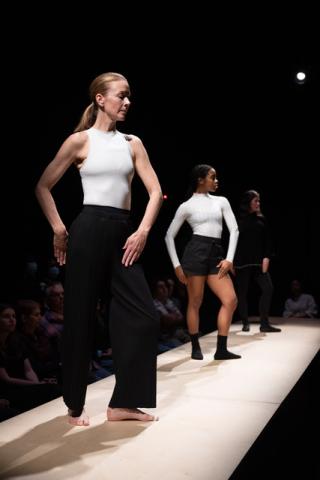
Jean Butler and fellow cast members dancing onstage during the U.S. premiere of What We Hold. Photo by Nir Arieli
Community-based dance also plays a vital role in sustaining cultural heritage. Dancer and choreographer Jean Butler, founder of Our Steps in New York, brings dancers, teachers, and scholars together around a shared Irish dance legacy. Rooted in Irish dance, Butler’s work blends traditional forms with contemporary practice, creating a living archive that strengthens community connections while honoring the past and inviting new voices into the future.
Together, these and other efforts show how dance continues to belong to everyone. Whether attending a child’s dance recital or simply dancing in your living room, celebrating through International Dance Day (April 29) or Thank a Dance Teacher Day (May 7), the art form remains a dynamic and enduring part of American life—ever evolving, ever in motion.
Source link